There is a lot more to know about Frankfurt, however, and I've done my homework so, let's see if I can teach you a little something.

Frankfurt is the fifth largest city in all of Germany, and also it's most expensive. As a matter of fact, it's the tenth most expensive city in the world. It is the financial and transportation center of the country and the largest financial center in all of Europe. It was the the former headquarters of the US Army. The city's full name is Frankfurt am Main and has a significant number of skyscrapers that form its skyline...so many, in fact, that Germans humorously refer to it as "Mainhattan".

It even has its own twin towers called the Deutsche Bank Twin Towers.

They were built in the 1980's and are each 155 meters tall.
For centuries, the highest structure in Frankfurt was Saint Bartholomew's Cathedral which is the main church of Frankfurt and was constructed in the 14th and 15th centuries. It has been recognized as a symbol for the national unity of Germany, especially during the 19th century. Although it has never been a bishop's seat, it is the largest church in Frankfurt and its role in imperial politics made the church one of the most important buildings of Imperial history. It has been written that part of St. Bartholomew's head is enshrined in the cathedral's central altar.
In 1867, the cathedral was destroyed by a fire and rebuilt in its present style.
 |
| The cathedral before the fire. |
Between October 1943 and March 1944 the old town of Frankfurt, the biggest old Gothic town of Central Europe was destroyed by six bombardments of the Allied Forces. The physical devastation of the old imperial town was intended to reduce public support for the war. The greatest losses occurred on the 22nd of March 1944. About 5,500 residents died in the raids and over one thousand buildings of the old town, most of them being half-timbered houses were destroyed. The cathedral suffered severe damage and the interior was burned out completely. The cathedral was reconstructed in the 1950s. The height of the cathedral is 95 meters.
 |
| The cathedral in May, 1945 after WWII |
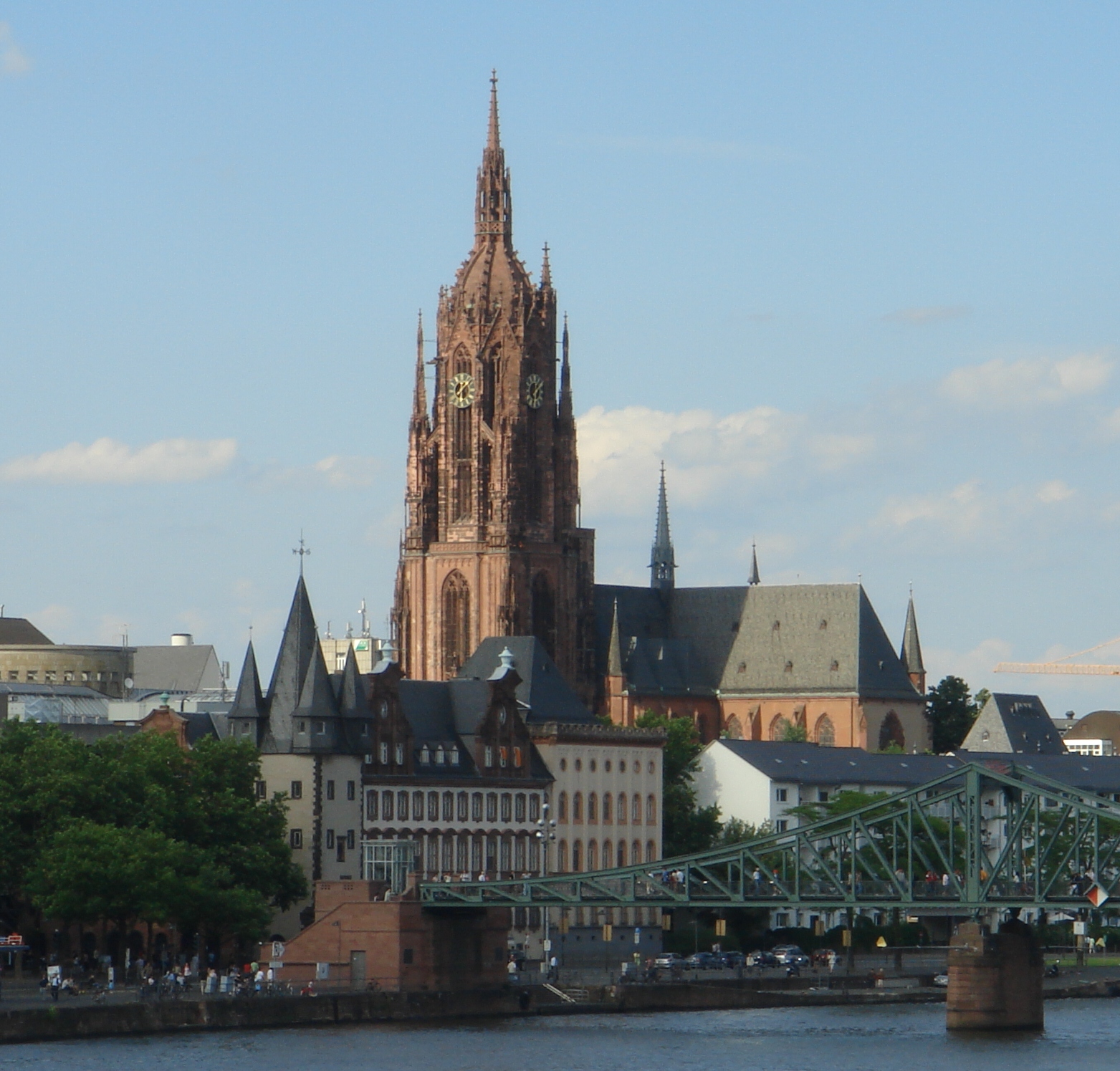 |
| St. Bartholomew's Cathedral today. |
During the war, the quarter of Bahnhofsviertel in Frankfurt was not as strongly bombed as was the inner city. In the time of the occupation by the American armed forces the district developed an active nightlife, allowing soldiers free rein to endless brothels. Prostitution was legalized in Germany in 2002. Brothels are registered businesses throughout the country and prostitutes pay taxes and have health insurance benefits. Registered prostitutes are regularly given free, mandatory health checks and Frankfurt's Bahnhofsviertel is one of the most famous red light districts in all of Europe.
 |
| Frankfurt's red light district, Bahnhofsviertel. |
Frankfurt is also home to more than thirty museums including the Stadel, which houses one of the most important art collections in all of Germany, and one of the most important opera houses in Europe, the Oper Frankfurt, dwells within the city.
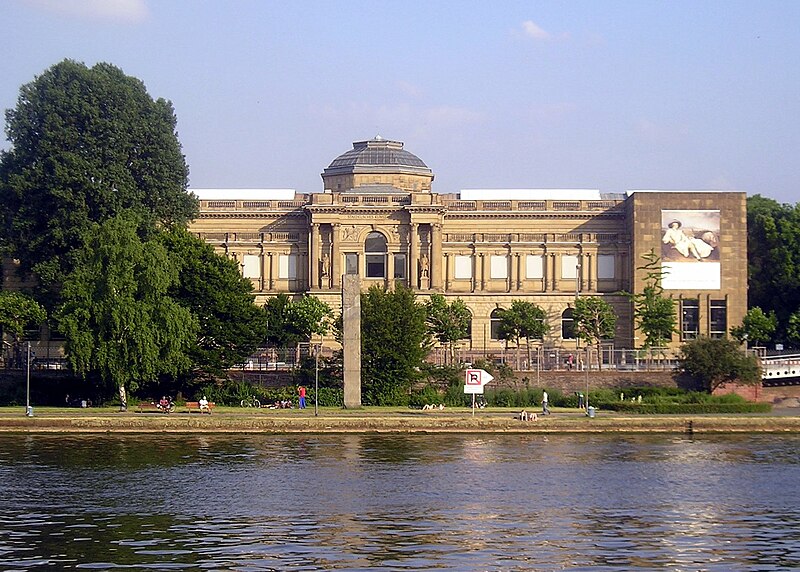 |
| the Stadel Art Museum |
The Frankfurt Book Fair is the world's largest trade fair for books, based on the number of publishing companies represented. As to the number of visitors. It is held annually in mid-October at the Frankfurt Trade Fair. The first three days are restricted exclusively to trade visitors; the general public can attend on the last two. Representatives from book publishing and multimedia companies from all over the world come to the Frankfurt Book Fair in order to negotiate international publishing rights and licensing fees. The fair is organised by a subsidiary company of the German Publishers and Booksellers Association. For five days more than 7,000 exhibitors from over 100 countries and more than 286,000 visitors take part. The Frankfurt Book Fair is considered to be the most important book fair in the world for international deals and trading. I have actually been asked to attend this fair with my publishing house, however the price tag to do so is incredibly high. I'm not sure it will be a possibility for me to go this fall...but who knows? Perhaps I will be there in the future.
So there you have it...Frankfurt in a nutshell. Now when we go back to spend a little time, I will have done my research and will know a little bit about what I'm seeing. :)

No comments:
Post a Comment